
RTU air intake screens help protect packaged rooftop unit intakes from hail, debris, cottonwood and leaf litter, and snow. Those loads can block or damage intake paths. This job differs from general rooftop concealment screens. CME builds custom steel screening that respects free area, service access, and the mechanical design on your drawings.
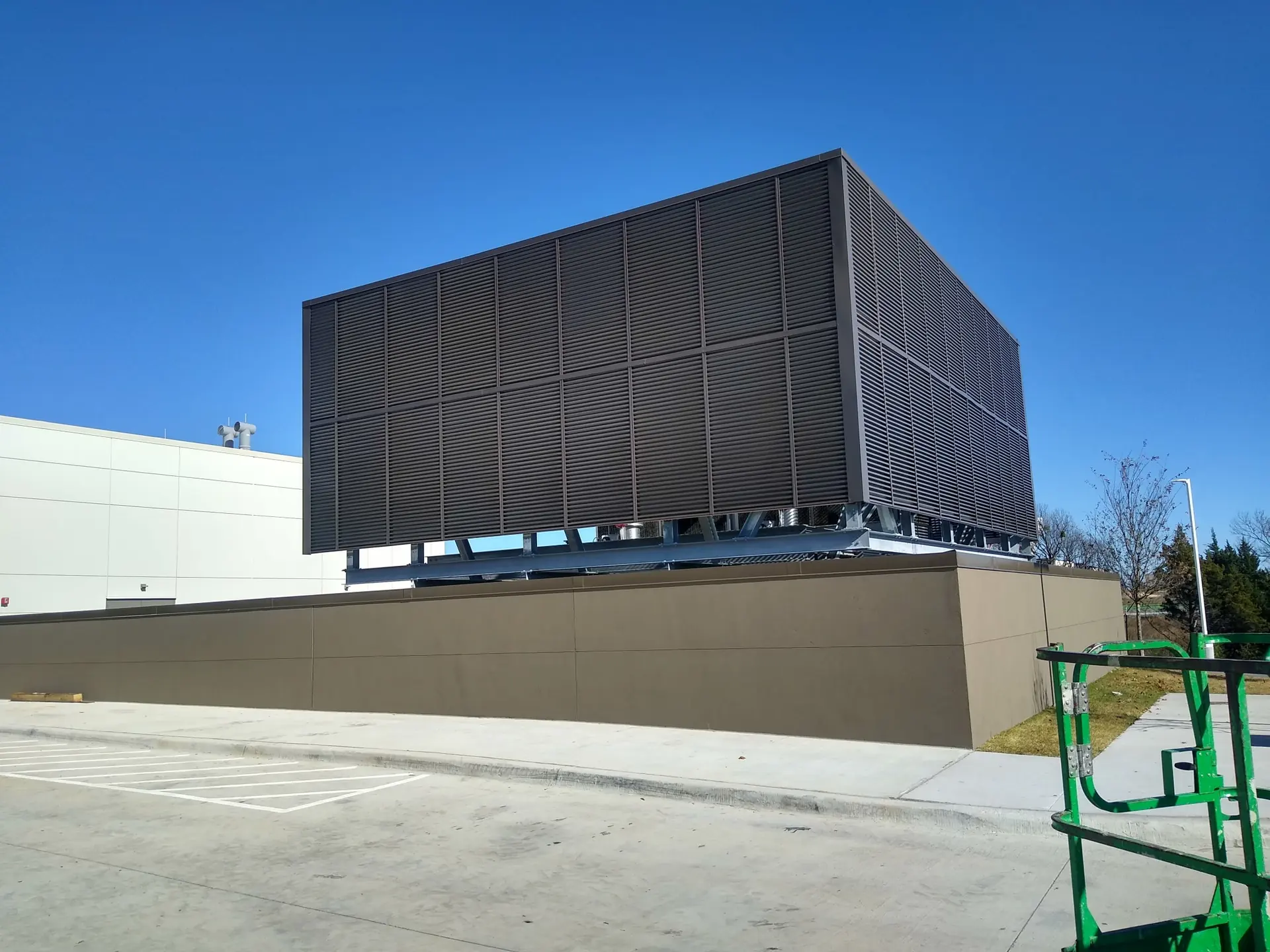
Our RTU snow screens page covers cold-climate concealment and louvered screening for snow load and drift. RTU air intake screens protect the intake itself from blockage and impact. Some projects need both. Put the difference in the submittal so reviewers do not treat two problems as one panel type.
Open intakes collect what the roof throws at them. Blocked intakes cut capacity. Hail and large debris can damage coils and louvers. Screening that respects free area and service paths reduces those risks. The mechanical engineer still owns airflow numbers. We fabricate to the free-area target they set.
We fabricate custom 26-gauge steel screening with siliconized polyester finish. Panel style follows the mechanical free-area target. Louver layouts apply when the engineer needs a set open area. Unit-mounted or post-mounted bases follow the attachment story on your drawings. Lead time tracks our commercial schedule: about 8 to 12 weeks for standard panels, and 12 to 14 weeks when louver layouts are required.
Intake protection fails if techs cannot reach the unit. We set service doors and clearances on your maintenance paths. Screens should not become another obstruction on the roof. Door locations should match filter pulls, coil access, and walk paths your facility team already uses.
Call for this scope when intake blockage or impact is a known site risk. Do not wait for zoning alone to force a screen wall. Tree-lined roofs, cottonwood seasons, hail corridors, and low intakes near parapets are common triggers. If your only need is to hide equipment from the street, start with mechanical equipment screens. Add intake detailing only where the mechanical design requires it.
Send unit model notes, intake orientation, and your city. We will confirm whether intake protection, concealment, or both belong in the package.
More screening options for this project
No. Concealment screens hide equipment from view for zoning or design review. Air intake screens protect intake openings from debris, hail, and snow while preserving airflow and access.
Yes. When the engineer sets a free-area target, we use louver layouts built in the shop. We do not leave open-area math to field drilling.
Send unit model notes, intake orientation, and your city. We will confirm whether intake protection, concealment, or both belong in the package.
Or call (855) 659-1584