
Rooftop mechanical equipment screening is driven by local zoning and planning codes (whether you must screen) and by adopted building codes such as IBC §1511.6 (how screens are constructed). This reference summarizes major metros and links to primary sources. Always confirm with your AHJ.
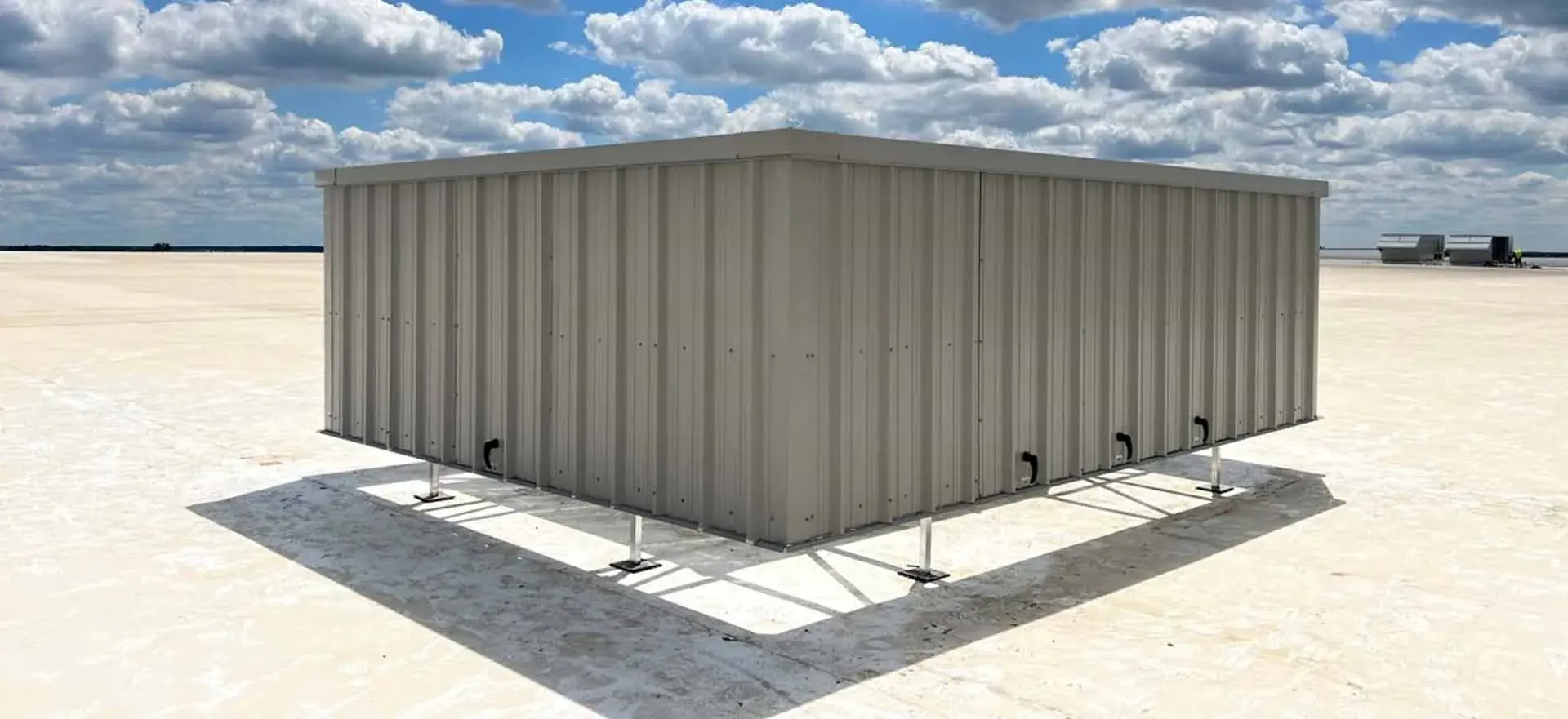
In most large U.S. cities, rooftop unit screens are not optional decoration; they are tied to zoning, design guidelines, or building codes. Authorities cite visual character, public safety around exposed equipment, and noise. Noncompliance can mean plan-check comments, fines, stop-work orders, or CO issues.
This guide is for owners, architects, contractors, and facility teams who need a fast map of major markets. It is not legal advice; codes change and districts differ within the same city.
If you are comparing wall materials first, read our RTU screen materials compared guide, then return here for city-by-city rules.
When you are ready to price a screen wall, see our custom RTU screens and rooftop equipment screening services or request a quote for RTU screening fabrication.
Building codes (including IBC §1511.6 where adopted) tell you how a mechanical equipment screen must be built: materials, height limits, fire separation concepts, and structural loads.
Zoning and planning codes usually decide whether you must conceal equipment from streets or public views, and how enclosures must look. A compliant project satisfies both.
The International Building Code is adopted (with local amendments) across the U.S. Section 1511.6 sets the baseline for construction of mechanical equipment screens on roofs. Your project still needs the locally adopted edition and amendments.
Height, material, and fire separation figures are covered in detail on our IBC 1511.6 mechanical equipment screens page, including where local amendments raise the thresholds.
Need a code-ready steel RTU screen wall for a commercial rooftop? We fabricate custom enclosures, coordinate shop drawings, and ship nationwide.
Requirements vary by municipality and zoning district. Use this section to orient research, then confirm with the authority having jurisdiction. Where we publish a local service page, it is linked for convenience.
New York City has some of the most comprehensive rooftop equipment screening rules in the country. Effective December 5, 2024, the Zoning Resolution was amended under Section 26-52 (residential) and Section 37-22 (commercial/manufacturing) to create unified Special Rooftop Screening and Enclosure Regulations in all zoning districts.
For a full walkthrough of the update, equipment lists, and permit planning steps, read our NYC rooftop screening rules guide for the 2024 zoning change.
The rules apply to energy infrastructure and accessory mechanical equipment on rooftops when not fully enclosed in the building, including RTUs, condensers, cooling towers, and exhaust fans, regardless of height limit or sky exposure plane triggers.
We work with teams on NYC submittals nationwide. See also our New York City RTU screens page for how we support local plan review.
| Topic | Summary |
|---|---|
| Coverage | All districts: residential, commercial, manufacturing |
| Sides screened | All sides of equipment |
| Materials | Opaque or perforated; if perforated, no more than 50% of the face may be open |
| Existing equipment | Equipment installed on or before Dec. 5, 2024 may be exempt if height does not exceed parapet or 6 ft above roof; verify with AHJ |
| Solar | Solar energy systems excluded from screening requirements |
| Effective date | December 5, 2024 |
Official sources: NYC ZR §26-52 · NYC ZR §37-22 · NYC heat pump / zoning guidance (PDF)
Los Angeles enforces screening through the Building Code (Chapter 15) and the New Zoning Code (effective January 27, 2025, Ordinance 188,418). HVAC equipment is listed as subject to vertical encroachment and screening standards.
The 2023 LA Building Code sets a maximum mechanical equipment screen height of 18 feet above the roof deck (unlimited for Type IA construction) and governs combustibility using fire separation distance.
For LA-area scope and submittals, see RTU screens for Los Angeles.
| Topic | Summary |
|---|---|
| Max screen height | 18 ft above roof deck; no limit for Type IA |
| Combustible materials | Permitted if fire separation ≥ 20 ft and screen height ≤ 4 ft, or with fire-retardant-treated wood |
| Materials | Must match exterior wall materials for the building’s type of construction |
| Fire resistance | Not required if fire separation distance > 5 ft |
| Codes | 2023 LABC §1511.6; LA New Zoning Code Div. 14.2 |
Official sources: 2023 LA Building Code §1511.6 (UpCodes) · LA New Zoning Code portal
Chicago addresses unoccupied rooftop structures in the 2019 Chicago Building Code, Section 14B-15-1510, with IBC-aligned provisions and local amendments. Rooftop mechanical equipment is expected to be screened on four sides and designed to help meet Chicago Municipal Code noise limits for stationary mechanical sources.
Chicago’s fire-separation threshold for rated construction can be more restrictive than the IBC in practice; confirm separation distances on your drawings.
We detail for Chicago plan review regularly. See RTU screens for Chicago.
| Topic | Summary |
|---|---|
| Screen height | 18 ft above roof deck (Type I: no limit); Type V: may not exceed maximum building height |
| Noise | Screening design should support compliance with municipal noise limits |
| Fire separation | Fire-resistance rating not required in some conditions when separation exceeds 15 ft (local amendment; verify) |
| Combustible materials | Conditionally permitted at ≥ 20 ft separation and ≤ 4 ft height, or with fire-retardant-treated wood |
| Code | CBC §14B-15-1510; municipal noise provisions |
Official sources: 2019 Chicago Building Code Chapter 15 (UpCodes) · Chicago Building Code (Municode)
Texas does not impose a statewide rooftop visibility screening mandate. In DFW, Dallas, Fort Worth, Plano, Irving, Arlington, and other cities each set their own zoning rules. Dallas commercial design standards commonly require mechanical equipment to be screened from public rights-of-way in many commercial districts.
We fabricate and coordinate for DFW regularly. See RTU screens for Dallas and verify the exact municipality on your permit set.
| Topic | Summary |
|---|---|
| State | Texas Uniform Mechanical Code governs installation; no statewide aesthetic screening mandate |
| Dallas | Commercial districts typically require screening from public street view; confirm by zoning district |
| Suburbs | Plano, Frisco, McKinney, Allen, and others often require screening in commercial/retail zones |
| Enforcement | Typical path: code compliance notices and fines from local building officials |
Official sources: Dallas Code of Ordinances (Municode)
Houston is the largest U.S. city without traditional zoning, so there is usually no city ordinance mandating RTU screens for street visibility the way peer cities do.
Mechanical and building codes still apply. Many commercial sites are subject to deed restrictions, PUDs, or management districts that require screening. Where a screen is installed, IBC §1511.6-style construction rules still govern how it is built.
| Topic | Summary |
|---|---|
| Zoning | None at citywide level |
| Mechanical | Houston-adopted UMC with amendments; commercial HVAC maintenance expectations (e.g., ASHRAE/ACCA 180) |
| Private restrictions | Common in retail, office, and master-planned areas |
| Screens | When provided, must meet adopted building code requirements for rooftop structures |
Official sources: Houston Permitting Center · Houston Building Code Chapter 15 (UpCodes)
Screening rules are only half the job - execution matters. Talk to us about louver, standard panel, or PBR panels matched to your AHJ package.
Phoenix and surrounding municipalities have long-standing requirements to conceal rooftop mechanical equipment from street view in many commercial and mixed-use contexts. Planned developments often add detail beyond base zoning.
Nearby Maricopa (city) language (MCC 18.80.110) is explicit: exterior mechanical equipment must be screened from public view, opaque on all sides, and architecturally integrated. Phoenix’s adopted IBC-based code addresses how screens are constructed.
We detail for Valley plan review regularly. See RTU screens for Phoenix.
| Topic | Summary |
|---|---|
| Phoenix zoning | Rooftop equipment concealed from street view in many commercial zones; PUDs may add rules |
| Maricopa MCC 18.80.110 | Exterior mechanical equipment screened from public view; opaque; integrated materials |
| Materials | Often required to match building color, shape, size, and material |
| Building code | Phoenix-adopted IBC Chapter 15 provisions for rooftop mechanical equipment screens |
Official sources: Phoenix Zoning Ordinance §1207 · Maricopa MCC 18.80.110 · Phoenix Building Code Chapter 15 (UpCodes)
San Francisco’s Planning Code Section 141 is explicit: rooftop mechanical equipment must be arranged so it is not visible from any point at or below the roof level of the subject building across most district types. Methods include parapets, grouped screening, or integrated architectural enclosures.
Alterations that materially change rooftop equipment can re-trigger review. Recent amendments also address enclosure height in the context of electrification and heat-pump equipment.
Always confirm requirements for the specific city in a multi-city Bay Area portfolio. This section focuses on San Francisco’s Planning Code baseline.
We detail for San Francisco plan review regularly. See RTU screens for San Francisco.
| Topic | Summary |
|---|---|
| Code | San Francisco Planning Code §141 |
| Visibility | Not visible from any point at or below roof level of the building |
| Methods | Parapet/walls, grouped screening, or integrated design |
| Alterations | May apply when rooftop equipment changes significantly |
| Mixed use | Enclosures often must match facade quality and design intent |
Official sources: SF Planning Code (Municode) · SF current codes hub
Seattle’s rooftop coverage updates (notably Ordinance 126600 (2022) and follow-on amendments) tie mechanical equipment treatment to how much rooftop area may be covered. Mechanical equipment is expected to be screened or enclosed to protect building aesthetic quality.
On many tall buildings outside Downtown, expanded coverage allowances are linked to equipment being screened or kept very low, so screening is often a practical requirement for feasible layouts.
See RTU screens for Seattle for how we support local submittals.
| Topic | Summary |
|---|---|
| Ordinances | 126600 (2022); 126857 (2023) and related code maintenance |
| Standard | Equipment screened or enclosed per Land Use Code expectations |
| Tall buildings | Outside Downtown, 75% coverage pathways may require screening or low equipment profiles; confirm with SDCI |
| Code | Seattle Municipal Code Title 23 (Land Use) |
Official sources: Seattle SDCI code changes hub · Seattle Ordinance 126600 (city clerk)
Miami’s Miami 21 form-based code requires outdoor mechanical and communications equipment to be concealed from view from frontages and sidewalks, typically within defined building layers, using liners, walls, streetscreens, or opaque gates.
Height allowances for equipment enclosures above the nominal building height vary by transect zone; some zones allow larger mechanical extensions than others.
We detail for Miami plan review regularly. See RTU screens for Miami.
| Topic | Summary |
|---|---|
| Code | Miami 21, Article 5 |
| Visibility | Concealed from view from any frontage or sidewalk |
| Methods | Liner buildings, walls, streetscreens, or opaque gates |
| Layers | Equipment placement rules reference Second/Third Layer concepts in the code |
Official sources: Miami 21 Article 5 (PDF) · Miami 21 hub
Denver’s adopted codes treat mechanical equipment screens as real building components. The Denver Building Code defines a mechanical equipment screen as a rooftop structure used to aesthetically conceal mechanical systems.
Denver Zoning Code Article 13 includes a dedicated Rooftop Mechanical Equipment Screening Measurement subsection; the substantive screening standard for a given site is set in that zone district's building form standards in Articles 3–9. Wind design (IBC Chapter 16) is a practical design driver for exposed rooftop enclosures.
We detail for Denver plan review regularly. See RTU screens for Denver.
| Topic | Summary |
|---|---|
| Codes | Denver Building Code (IBC-based); Denver Zoning Code |
| Support | Mechanical equipment often on minimum 8-inch curbs or approved supports |
| Definition | Mechanical equipment screen defined in code as concealment structure |
| Visibility | Commercial/mixed-use visibility rules apply in many districts; confirm on zoning map |
| Wind | Rooftop structures must satisfy adopted wind provisions for the site |
Official sources: Denver Building Code Chapter 15 (UpCodes) · Denver Community Planning & Development
Minneapolis maintains a dedicated Rooftop Ordinance (Chapter 535) with numeric standards: screening must be at least 60% opaque and at least as tall as the equipment it conceals, with methods including walls, integrated architecture, or structural integration.
There are limited exemptions for certain industrial locations far from residential uses; verify applicability.
We detail for Minneapolis plan review regularly. See RTU screens for Minneapolis.
| Topic | Summary |
|---|---|
| Code | Minneapolis Code of Ordinances, Chapter 535 |
| Opacity | Minimum 60% opaque |
| Height | At least as tall as screened equipment |
| Methods | Wall/fence screening, architectural integration, or integral structure design |
| Materials | Architecturally compatible with the building |
Official sources: Minneapolis Code Ch. 535 Rooftop (Municode) · Minneapolis CPED
Nashville's zoning code (Metro Code §17.16.185) includes a rooftop mechanical equipment screening requirement with a 30-ft height cap and full-concealment standard. HVAC, generators, and similar equipment must be concealed from adjacent roadways, properties, and the site itself — confirm applicability to your specific zoning district with Metro Planning.
No screening is required for renewable energy infrastructure or green-roof infrastructure. Design standards may apply to specific overlay or corridor districts — verify applicability for your zoning district.
We detail for Nashville plan review regularly. See RTU screens for Nashville.
| Topic | Summary |
|---|---|
| Code | Metro Code §17.16.185 |
| Visibility | Full concealment from adjacent roadways, properties, and the site |
| Height cap | 30 ft for HVAC, generators, and similar rooftop mechanical equipment |
| Exemptions | Renewable energy and green-roof infrastructure |
| Wind | Severe thunderstorm and tornado exposure — structural documentation matters |
Official sources: Metro Nashville legislative record · Metro Nashville Codes Department
High-level snapshot only. Always read the adopted code sections for your site.
Required citywide under updated ZR §26-52 / §37-22 (2024).
Building + New Zoning Code; 18 ft screen height baseline.
CBC §14B-15-1510; four-side screening and noise coordination.
Municipality-specific; Dallas commercial districts commonly require screening.
No city zoning; private restrictions and codes still matter.
Strong concealment rules; Maricopa MCC 18.80.110 especially explicit.
Planning Code §141 visibility standard.
Land Use Code + rooftop coverage ordinances.
Miami 21 Article 5 concealment from frontage.
Defined mechanical equipment screens; zoning visibility.
Chapter 535 opacity and height-matching rules.
IBC §1511.6 baseline for how screens are built when required.
Zoning and planning codes usually control whether equipment must be hidden from public view and what enclosure quality is expected. IBC §1511.6 (as adopted locally) controls how the screen is constructed: materials, height, separation, and related requirements. You may need to satisfy both.
Properly engineered screens preserve required airflow. louver panels, louvers, and coordinated openings are common. For example, New York’s rules allow perforated faces when open area is capped-your mechanical engineer should sign off on free area and manufacturer clearances.
Often, yes, when changes are material-especially if equipment height, footprint, or visibility changes. Some jurisdictions explicitly tie screening to alterations of rooftop equipment. Treat upgrades as a permit trigger until your AHJ confirms otherwise.
Under typical IBC §1511.6 adoptions, screens align with exterior wall material rules for the construction type. Steel panel and louver systems are widely used on commercial roofs because they are durable, maintainable, and coordinate well with siliconized polyester finished architectural finishes.
Not necessarily. Houston lacks traditional city zoning, but private restrictions, lease requirements, lender conditions, and building codes still apply. If a screen is part of the design, it must be built to the adopted construction standard.
This article is for general research only. Codes, ordinances, and staff interpretations change. Always verify requirements with your local building department, licensed design professional, or code consultant before relying on this summary for compliance decisions. Requirements can differ by zoning district within the same city.
Need shop drawings and a fabricated screen wall? CME builds custom steel rooftop equipment screens nationwide.