
Non-penetrating rooftop HVAC screens hide equipment without cutting new holes through a roof membrane that is still under warranty. CME designs ballasted or post-mounted bases that work with the existing roof system and your engineer of record. If you searched this phrase, roof warranty and landlord approval are usually the real objections.
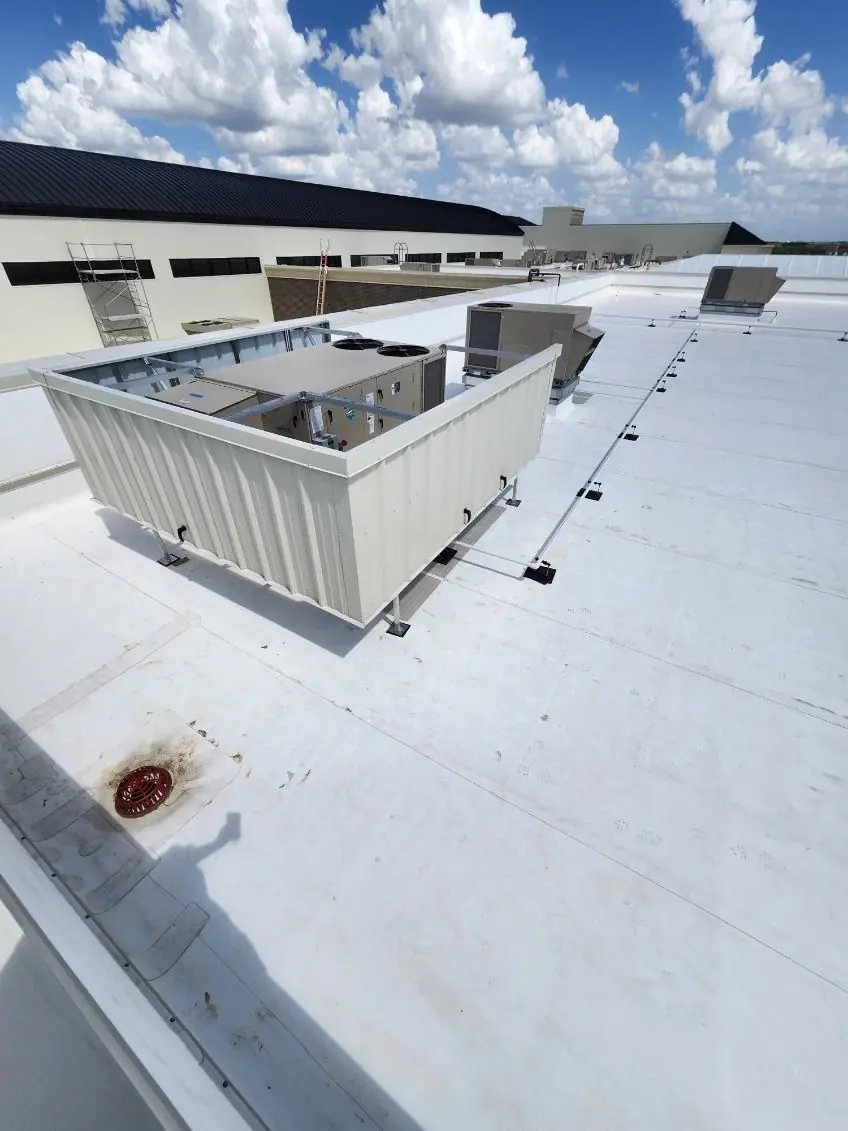
A penetrating attachment cuts through the membrane and into structure. A non-penetrating system uses ballasted or post-mounted bases. Those bases sit on or fasten in ways your roofing and structural teams approve so the warranty story stays intact. The screen panels are still custom steel. The difference is how the enclosure lands on the roof.
Many roof warranties limit new penetrations after install. Re-roof projects and leased buildings face the same rule: fewer holes, clearer responsibility. Specifying non-penetrating RTU screens early keeps screening from turning into a warranty fight at closeout. Bring roofing manufacturer requirements and landlord rules into the first drawing review.
We work attachment details with your structural engineer of record. Wind documentation starts at a 120 mph standard rating. Sites that need more get project engineering. Shop drawings show base details, bracing, and service doors so reviewers see the full story before steel is fabricated.
Non-penetrating rooftop HVAC screens show up on re-roofs, roofs still under warranty, and leased buildings where the owner or landlord controls membrane work. Historic roofs and landmark districts also show up here when new penetrations fail design review.
Tell us if the roof is under warranty, leased, or mid re-roof. Share the membrane type if you have it. We will map attachment options and confirm whether ballast, posts, or curb-mounted options fit the structural story. If the engineer later needs a different attachment, we revise the shop drawings before fab.
More screening options for this project
Yes when engineered for the site. We document wind and attachment with your engineer of record. Standard rating is 120 mph. Higher demands get project engineering.
Yes. Attachment and ballast details need roofing and structural alignment. We include those notes in the shop drawing package so field teams are not inventing a detail on the roof.
Tell us if the roof is under warranty, leased, or mid re-roof. Share the membrane type if you have it, and we will map attachment options.
Or call (855) 659-1584