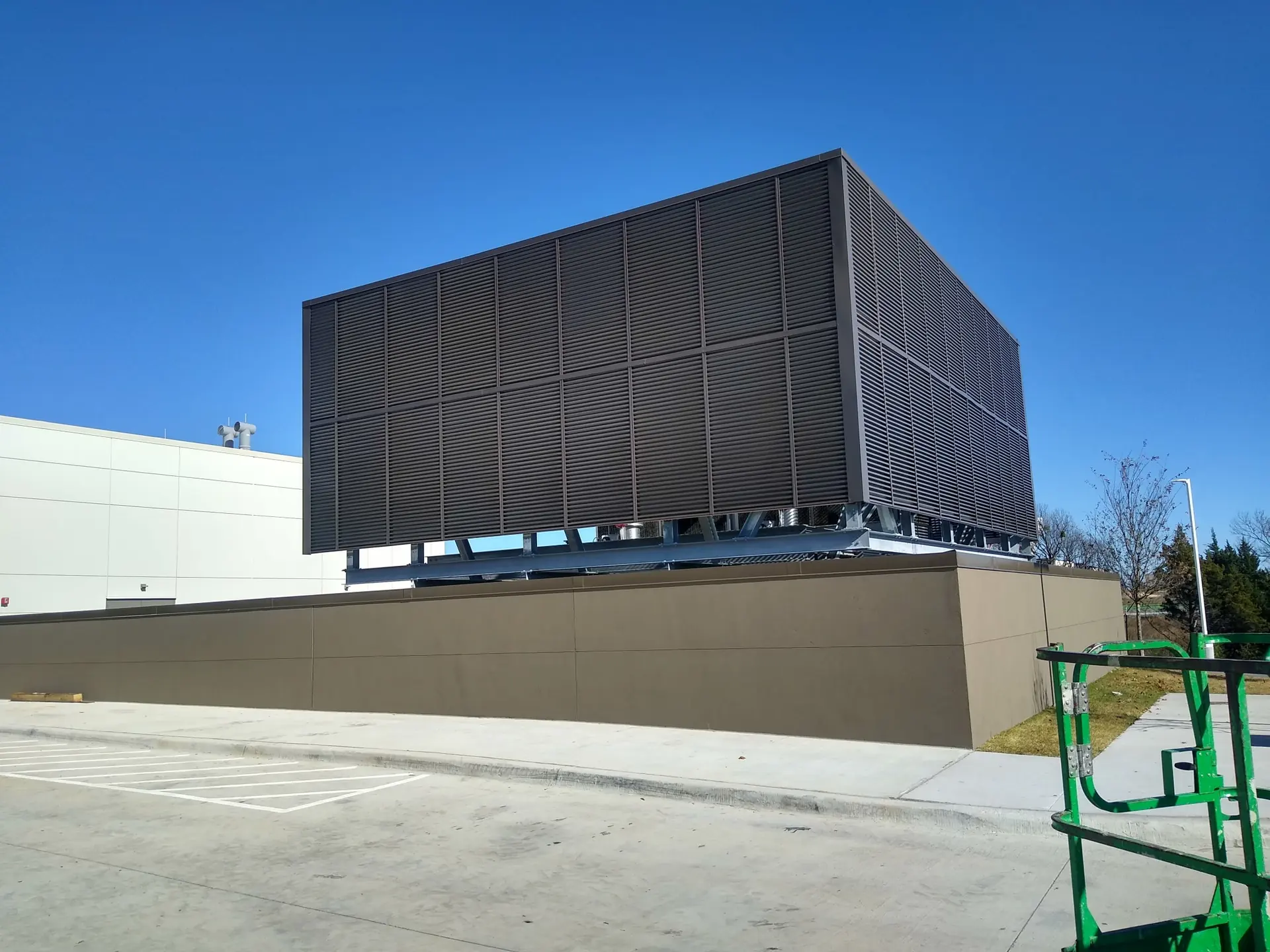
All 50 states have adopted the International Building Code in some form, so one short section sets the construction floor for nearly every rooftop screen in the country. It governs height, materials, and fire separation. It does not decide whether your project needs a screen at all — that comes from local zoning.
Noncombustible steel is the broadest path to compliance under 1511.6, which ties screen materials to the building's type of construction.Scope
What does Section 1511.6 actually govern?
Section 1511.6, titled "Mechanical Equipment Screens," sits in Chapter 15 of the IBC, the chapter covering roof assemblies and rooftop structures. It is published by the International Code Council and adopted in full or by amendment by all 50 states and the District of Columbia.
The distinction that trips up most submittals: 1511.6 tells you how a screen must be built, not whether you need one. The requirement to screen rooftop equipment almost always comes from a local zoning ordinance or design guideline. A city can have no screening ordinance at all and still enforce 1511.6 the moment you decide to build a screen. Those two layers get reviewed by different people, and clearing one does not clear the other. Our RTU screening requirements by city guide covers the zoning layer metro by metro.
How tall can a rooftop equipment screen be?
The baseline is 18 feet above the roof deck. For buildings of Type IA construction, the IBC sets no upper limit.
In practice almost nothing gets near 18 feet. Screen height is normally driven down by the zoning sight-line test — how much of the unit is visible from the far side of an adjacent street — which typically lands a few feet above the tallest unit. Treat 18 feet as the ceiling you are unlikely to reach rather than a target, and confirm the number in your locally adopted edition, because amendments do move it.
What materials does 1511.6 allow?
The governing rule is a reference rather than a list: screens must be built from materials consistent with the exterior wall requirements for the building's type of construction. So the answer depends on what the building is, which is why "can we use wood?" has no universal answer.
Noncombustible materials — metal panels, architectural louvers, fiber cement — are the broadest path to compliance because they satisfy the requirement across construction types. Combustible materials are conditionally permitted, and the conditions are narrow. Any one of the following can open the door:
Fire separation distance of at least 20 feet and screen height no greater than 4 feet above the deck
Fire-retardant-treated wood
Panels with a flame spread index of 25 or less
The 4-foot cap in that first condition is the reason combustible screens are rare on real projects: a screen that short usually fails the sight-line test that prompted the screen in the first place. We compare the practical trade-offs in RTU screen materials compared.
When does a screen need a fire-resistance rating?
Under the IBC baseline, where fire separation distance exceeds 5 feet, the screen is generally not required to carry a fire-resistance rating. Below that, expect the rating question to come up in review.
This is one of the most commonly amended numbers in the section, and amendments run in the restrictive direction. Chicago, for example, does not drop the rating requirement until separation exceeds 15 feet — three times the IBC distance. Verify the threshold in the adopted local code rather than the model code.
Where local amendments override the baseline
"Adopted by all 50 states" does not mean "identical in all 50 states." Jurisdictions adopt a specific edition and then amend it, so the section number stays familiar while the numbers underneath it move. Two examples from markets we work in:
Los Angeles enforces screening through both the 2023 LA Building Code §1511.6 and the New Zoning Code, Division 14.2, effective January 27, 2025 under Ordinance 188,418. The building code adopts the 1511.6 standard with local modifications; the zoning code is what lists HVAC equipment as subject to screening.
Chicago raises the fire separation threshold to 15 feet and regulates combustibility more closely, generally requiring noncombustible or fire-retardant-treated materials in multi-story conditions.
Always pull the edition your AHJ has actually adopted. Citing the model code when the city is running an amended version is a predictable way to earn a comment.
What this means for your submittal
Reviewers are checking whether the drawings answer 1511.6 on their face. That means the construction type is stated, the material callout follows from it, the screen height is dimensioned from the roof deck, and the fire separation distance is shown where it matters. A set that leaves any of those to be inferred gets a comment.
We build the screen system and produce the shop drawings, elevations, attachment notes, and finish callouts that carry those answers. The structural stamp stays with your engineer of record. Scope and spec language for the screen itself live on our mechanical equipment screens page.
Usually not. The requirement to screen almost always comes from a local zoning ordinance or design guideline. Section 1511.6 governs how the screen is constructed once one is being built. Many cities enforce both, and the two get reviewed separately.
Eighteen feet above the roof deck, with no upper limit for Type IA construction. Confirm it in your locally adopted edition, since this is an amendable number. Zoning sight lines usually set a lower practical height anyway.
Only under narrow conditions: fire separation distance of at least 20 feet with the screen no taller than 4 feet, or fire-retardant-treated wood, or panels with a flame spread index of 25 or less. The 4-foot cap defeats most sight-line requirements, which is why noncombustible steel is the common answer.
Under the IBC baseline, generally not where fire separation distance exceeds 5 feet. Local amendments raise that distance — Chicago uses 15 feet — so check the adopted code for your site.
The section number does, because every state adopts the IBC in some form. The values inside it do not always survive adoption unchanged. Pull the edition and amendments your AHJ enforces.
Note on use of this page
This article supports early planning only. Codes are adopted by edition and amended locally, and staff interpretations differ. Confirm every height, material, and separation figure against the code your building department has actually adopted before you buy or fabricate.
Need a screen that answers 1511.6 in the drawings? Contact CME for shop drawings and a fabrication quote.