RTU screen materials compared

Rooftop RTU screens hide mechanical equipment from view. The right material affects cost, maintenance, airflow, and how easily your package passes plan review. This guide compares common options in plain language. It is not legal advice-always confirm with your AHJ and design team.

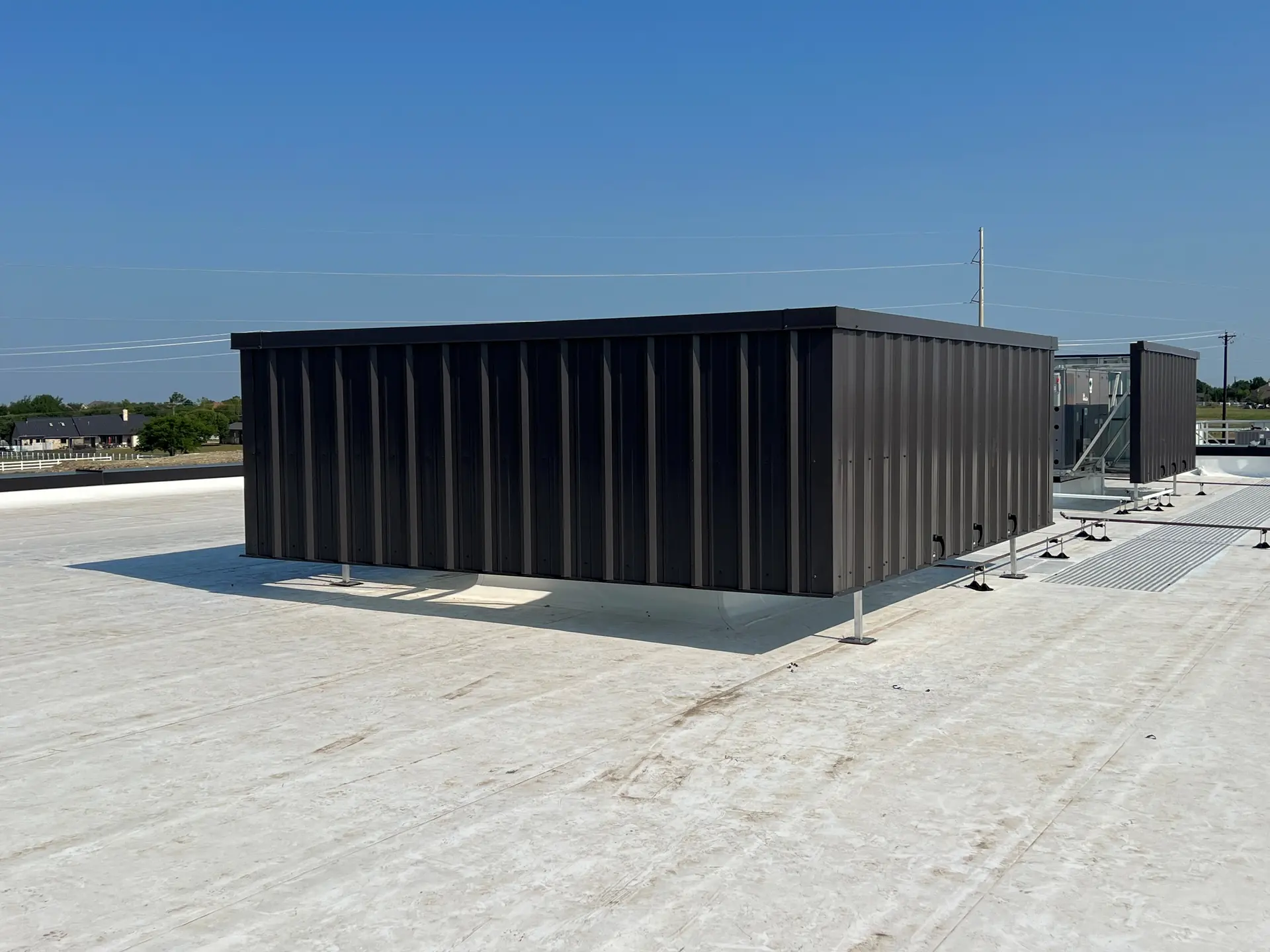
Commercial roof with a steel screen wall hiding packaged HVAC units
Steel remains the workhorse for many commercial RTU screen walls because it is strong, easy to coat, and familiar to reviewers.

Why RTU screen material matters

Your screen has to do three jobs at once: meet visibility rules, survive wind and weather, and stay serviceable for HVAC crews. Material choice drives all three. Pick something that matches your local screening rules, your engineer's details, and your building's finish schedule.

  1. Building code basics (simple)
  2. Steel screens
  3. Aluminum screens
  4. Wood and treated wood
  5. Composites and metal composite panels
  6. Side-by-side snapshot
  7. How ClearView Screens fits
  8. FAQ

Quick takeaway

On many Type I and II commercial buildings, teams default to noncombustible steel because it lines up with common IBC expectations for mechanical equipment screens, powder-coats to match the facade, and holds up on hot roofs. Other materials can work when separation, height, and construction type allow-always follow the adopted code and local amendments.

RTU screen materials and the building code (high level)

Adopted codes usually ask mechanical equipment screens to be built like serious building components-not afterthought fences. In many jurisdictions, IBC Section 1511.6 (mechanical equipment screens) is the starting point for how a screen is built once screening is required. Your city may amend it.

For the official text, use the ICC Digital Codes source for the edition your jurisdiction adopted.

Steel RTU screens (solid, perforated, louvered)

Steel sheet is the most common backbone for custom commercial RTU screens. Fabricators can cut panels to your equipment map, add doors for service, and powder-coat to match trim or wall panels.

Steel is heavy, so bases, anchors, and wind documentation need to match the project. For campuses with tight rules, see RTU screens for schools and RTU screens for hospitals.

Aluminum equipment screens

Aluminum systems are lighter than steel and resist corrosion in coastal or humid air. They can be a strong match when weight on the roof or corrosion risk is the driver. Downsides include cost at thicker gauges, careful detailing around fasteners, and making sure the proposed system still satisfies structural and impact expectations for your site.

Wood and fire-retardant-treated wood

Wood can appear on some projects when separation and height triggers allow combustible materials under the adopted code. Teams sometimes specify fire-retardant-treated wood to meet limited combustibility paths. Wood needs a maintenance plan: coatings, inspection, and detailing at the roof edge so moisture does not shorten service life.

Composites and ACM-style panels

Composite and metal-composite panels can match high-end facades and come in long flat sheets. They are common in architectural cladding but less common as a full custom RTU screen fabricator product unless the architect specs a system with tested attachments. If you go this route, plan for engineered connections, panel labels, and shop drawings that tie to wind and deflection limits.

RTU screen materials side by side

MaterialTypical prosWatch-outs
Steel (solid / perf / louver)Strong, familiar to AHJs, great powder coat color control, perforated for airflowHeavier; needs real structural coordination
AluminumLight; corrosion resistant in wet or coastal airPremium cost; detail fasteners and structure
Wood / FRTWCan meet some aesthetic goals when code allowsMaintenance; combustibility triggers
Composites / ACM-styleArchitectural flat panels; facade matchEngineered attachment; tested systems

Need 26-gauge steel panels, shop drawings, and a finish that matches your building? ClearView Screens fabricates custom RTU screening nationwide.

Request a quoteCall (855) 659-1584

How ClearView Screens approaches steel RTU screens

We focus on custom steel rooftop equipment screening: solid panels, perforated layouts, and louvered configurations when your engineer requires set open area. We coordinate shop drawings, finishes, and field installation so the screen matches the approved package-not a generic kit trimmed on site.

We service Phoenix, Dallas, and the wider Sun Belt. If you are pricing a Sun Belt job, our Phoenix page shows how we support hot-climate plan review and freight. Dallas teams can start with Dallas for DFW-style submittals.

RTU screen materials FAQ

No. Requirements depend on construction type, fire separation, local amendments, and sometimes zoning-driven opacity rules. Steel is a common default for commercial work because it is noncombustible and easy to document, but your architect and code consultant should confirm what your specific job allows.

When mechanical engineers need a rated free area for airflow or when a city allows perforated faces with a cap on open percent. The hole pattern, percentage open, and any acoustic needs must be coordinated with equipment cut sheets.

Sometimes, but transitions create thermal movement, finish, and attachment details that must be drawn and reviewed. If you mix systems, plan for a single responsible fabricator scope or very clear division of responsibility in the specs.

Your authority having jurisdiction and the licensed professionals of record interpret the adopted code for your site. Bring early sketches to the architect and structural engineer so material assumptions match the construction type and separation distances.

Note on use of this page

This article supports early planning only. Codes change, and staff interpretations differ. Confirm all material and assembly choices with your local building department and licensed design team before you buy or fabricate.

Ready for steel shop drawings and fabrication? Contact ClearView Screens for a commercial RTU screen quote.

Get a quote Call (855) 659-1584